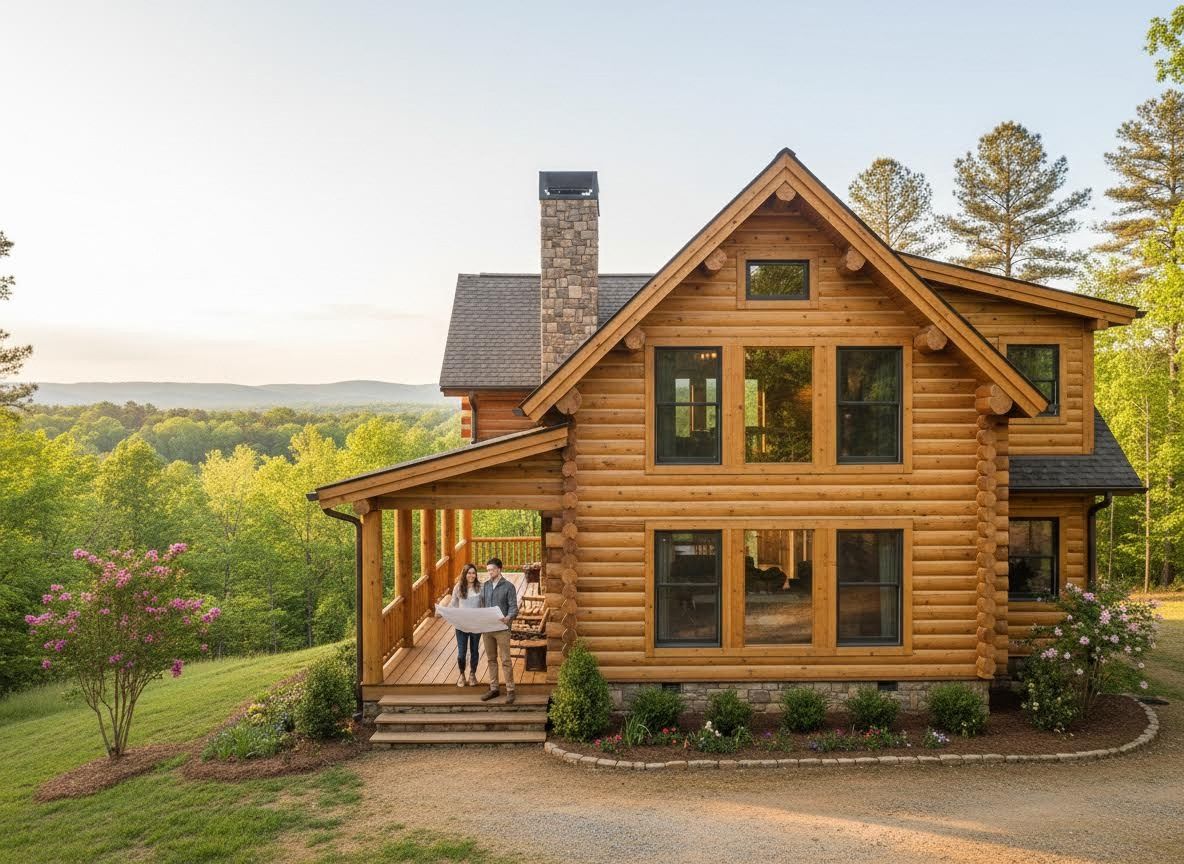
Considering a custom log home in the Peach State offers a unique opportunity to blend rustic charm with refined living. These distinctive residences evoke a sense of timeless grace and warm hospitality, perfectly suited for Georgia's beautiful landscapes. Before embarking on such a significant project, it's essential to understand the unique characteristics and considerations involved in creating a log home that truly embodies Southern tradition while embracing contemporary comfort. At Georgia Design and Build, we understand the intricacies of crafting homes that stand the test of time, and we're here to guide you through the process.
What Materials Are Best for a Log Home in Georgia?
When envisioning your custom log home, the choice of materials is paramount, especially given Georgia's climate. Different wood species offer varying degrees of durability, insulation properties, and aesthetic appeal. Common choices include pine, cedar, and cypress. Pine is a popular, cost-effective option, known for its workability and ability to take stains beautifully, though it requires proper treatment against pests and moisture. Cedar is naturally resistant to rot, decay, and insects, making it a more durable, low-maintenance choice, often favored for its aromatic qualities and rich color. Cypress, prevalent in the Southern United States, is highly resistant to rot and insects due to its natural oils, offering exceptional longevity and a unique grain pattern. The method of log preparation—whether hand-hewn, milled, or full-round—also significantly impacts the home's final look and structural integrity.
How Does Structural Engineering Differ for Log Homes?
The structural engineering of a log home presents fascinating differences compared to conventional stick-built structures. Log homes are designed to settle over time as the logs dry and compress, a natural process that requires careful planning in the initial design. This settling can be several inches over the first few years, and experienced builders account for this by incorporating "slip joints" around windows, doors, and interior walls to prevent damage. Proper joinery techniques, such as saddle notches, dovetails, or Swedish cope, are crucial for creating tight, weather-resistant seals between logs. The sheer mass of the logs themselves contributes to the structural stability and thermal performance, requiring specialized foundation and roofing considerations to support the substantial weight and unique load distribution.
What Are the Insulation and Energy Efficiency Considerations for Log Homes?
There's a common misconception that log homes are not energy efficient, but modern construction techniques have largely dispelled this. The thermal mass of solid wood logs acts as a natural insulator, slowing the transfer of heat and cold through the walls. This means logs can absorb heat during the day and release it at night, helping to regulate indoor temperatures. However, achieving optimal energy efficiency also depends on several factors beyond the logs themselves. High-performance windows and doors, a well-insulated roof system, and meticulous attention to sealing gaps and chinking between logs are critical. Advanced chinking materials are flexible and durable, providing an airtight seal that prevents drafts and moisture infiltration, contributing significantly to a comfortable and energy-efficient living environment in Georgia's varying seasons.
What Unique Maintenance Does a Log Home Require?
Maintaining a log home requires specific care to preserve its beauty and structural integrity for generations. The most crucial aspects involve managing moisture, protecting against pests, and preserving the wood's finish. Exterior log surfaces need periodic cleaning, staining, and sealing, typically every 3-7 years depending on exposure to sun and moisture. High-quality stains and sealants protect the wood from UV damage, water absorption, and fungal growth. Regular inspection for signs of insect activity, such as carpenter bees or termites, is also vital, often requiring preventative treatments. Maintaining proper drainage around the foundation and keeping vegetation away from the logs will minimize moisture exposure, extending the life and beauty of your distinguished log home.
Building a custom log home in Georgia is an investment in a lifestyle defined by timeless grace and warm hospitality, where Southern tradition meets modern luxury. Understanding the nuances of materials, structural engineering, insulation, and maintenance is key to realizing this dream. By partnering with experts who uphold a legacy of exceptional craftsmanship and an unwavering commitment to excellence, you can create a residence that is not only beautiful but also built to endure. To learn more about how Georgia Design and Build can bring your vision for a distinguished log home to life, we invite you to explore our approach to bespoke home building.